
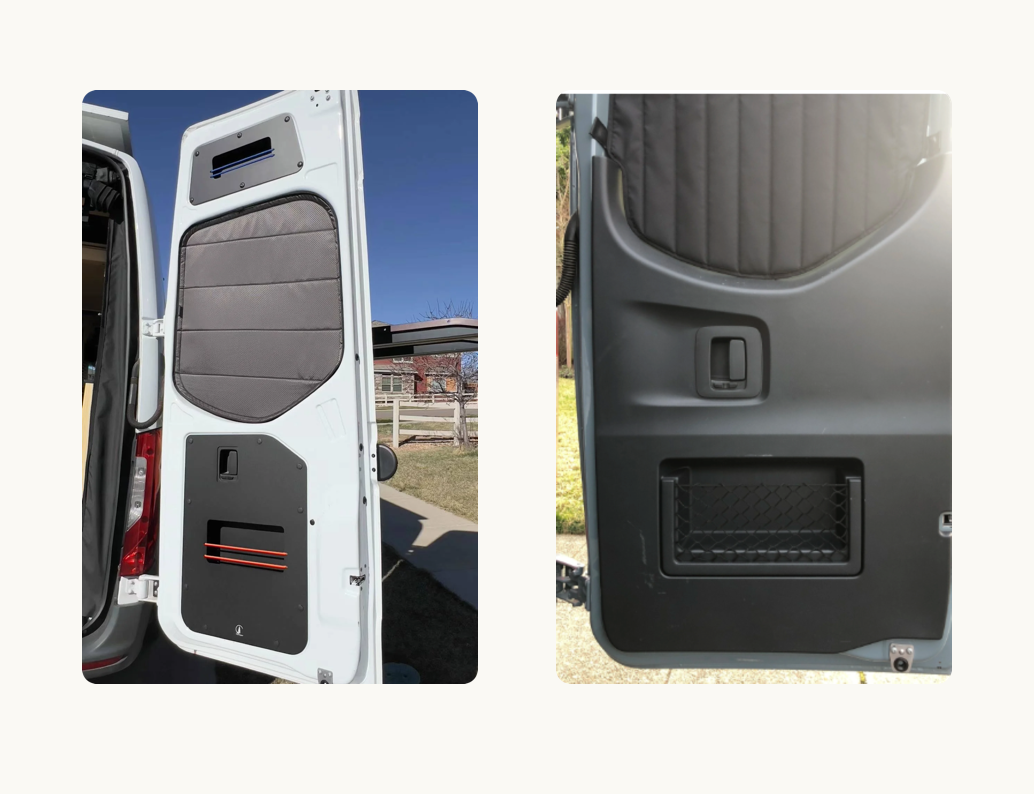
Maxx Cover is designed to attach directly to the exposed metal areas of your rear doors.
That means your rear doors need enough bare metal around the attachment areas for the magnets to connect securely and for the cover to sit in the correct position.
If your van has plastic panels, factory inserts, lower door pockets, or aftermarket trim, it does not automatically mean Maxx Cover will not fit.
What matters most is where the plastic is located, how much metal is still exposed, and whether the plastic trim sticks out far enough to interfere with the cover.
This guide explains what to look for before ordering and how to tell whether your rear doors are likely to be compatible.
The Key Question: Is There Enough Exposed Metal?
Maxx Cover uses magnets to attach to the rear doors.
Those magnets need exposed metal in the right areas. In many vans, there may be plastic panels in the center of the rear door, while the outer edges and surrounding attachment areas are still bare metal.
That type of setup may still work.
Plastic on the door is not always the issue.
Plastic covering the magnetic attachment areas is the issue.
If the magnets can still reach the exposed metal around the door and the cover can sit flat, Maxx Cover may fit properly.
If large plastic panels, bulky pockets, or aftermarket trim cover those areas, the fit may be affected.
Not All Plastic Panels Affect Fit the Same Way
Plastic rear door panels can look very different depending on the van model, trim level, and previous interior build.
Some panels are flat factory inserts that sit mostly in the center of the door. These may not interfere if there is still enough bare metal around the edges for magnetic attachment.
Other panels are thicker, bulkier, or shaped like storage pockets. These are more likely to create fitment problems because they can block the magnets from reaching the metal surface or push the cover away from the door.
Common examples that may affect fit include:
- Large lower plastic panels
- Bulky factory door pockets
- Molded storage pockets
- Thick aftermarket trim
- Carpeted or upholstered rear door panels
- Wood or fabric-covered door panels
- Custom interior panels built over the metal
A small or flat plastic insert is not the same as a bulky lower pocket.
The more the panel covers the outer edges or sticks out from the door surface, the more likely it is to interfere.
When Plastic Panels Are Usually Okay
Plastic panels may be okay if they sit mostly in the center of the rear door and do not cover the areas where the magnets need to attach.
For example, some rear doors have a flat plastic insert on the lower portion of the door, but the surrounding edges are still exposed metal. In that case, the magnets may still have enough surface area to hold the cover in place.
The important things to check are:
- Is there exposed metal around the outer edges of the rear doors?
- Is there exposed metal near the upper and lower attachment areas?
- Does the plastic panel sit mostly in the center?
- Does the plastic panel sit relatively flat?
- Can the cover sit close to the door without being pushed outward?
If the answer is yes, the plastic insert may not be a problem.

Example of a compatible rear door setup: the center panels are installed, but the outer attachment areas remain exposed metal for magnetic fitment.
When Plastic Panels May Interfere
Plastic panels are more likely to interfere when they cover the metal areas needed for attachment or add too much thickness to the rear door surface.
This can happen when the rear doors have large molded plastic panels, factory storage pockets, or aftermarket interior trim that covers most of the metal.
These setups can create two problems.
First, the magnets may not be able to reach the metal surface.
Second, the cover may be pushed away from the correct position, which can affect alignment around the door edges, handles, latches, or window area.
If the plastic panel is bulky, sticks out, or covers the outer areas of the rear door, Maxx Cover may not fit properly unless that trim is removed.

Example of a setup that may interfere with fitment: bulky lower plastic pockets can block magnetic attachment areas.
What If Only the Lower Half Has Plastic Trim?
This is one of the most common fitment questions.
If the lower half of your rear door has a flat plastic insert, but the surrounding edges remain bare metal, Maxx Cover may still fit.
If the lower panel includes bulky storage pockets, thick molded trim, or covers the magnetic attachment areas, it may interfere with the fit.
The question is not simply whether there is plastic on the lower half of the door.

Transit example: lower plastic panels do not always prevent fitment if the surrounding attachment areas remain exposed metal.
What About Aftermarket Interior Panels?
If your rear doors are already fully finished with custom interior panels, wood, fabric, upholstery, carpet, or thick insulation, Maxx Cover may not be compatible.
Maxx Cover is designed to attach to the metal surface of the rear doors, not to finished wall panels or soft trim.
If the metal is covered by a custom build, the magnets may not be able to attach properly. The added thickness may also change how the cover sits around the door.
Maxx Cover works best when the rear doors still have exposed metal around the attachment areas.
Can I Remove the Plastic Panels?
In many vans, factory plastic rear door panels can be removed.
If you remove the plastic panels and there is enough exposed metal underneath, Maxx Cover may fit as intended.
However, every van is different. Some panels are easy to remove, while others may leave clips, holes, uneven surfaces, or other trim pieces behind.
If you are considering removing plastic panels, check the door surface underneath and make sure there is enough exposed metal for the magnets to attach.
How to Check Your Rear Doors Before Ordering
Before ordering, open both rear doors and look at the inside surface.
You are checking for exposed metal around the areas where Maxx Cover would attach.
Ask yourself:
- Are the outer edges of the rear doors exposed metal?
- Is there bare metal around the upper door area?
- Is there bare metal around the lower door area?
- Are the plastic panels flat or bulky?
- Do the panels sit in the center, or do they cover the edges?
- Are there lower storage pockets that stick out?
- Are there custom panels, fabric, wood, or carpet covering the metal?
- Would the cover be able to sit close to the door?
If the rear doors have exposed metal around the attachment areas, Maxx Cover is more likely to fit as intended.
If large areas are covered by plastic or aftermarket panels, the fit may be affected.
Not Sure? Send Us a Photo
If you are not sure whether your rear doors are compatible, the easiest way to check is to send us a clear photo before ordering.
Please include:
- A full photo of both rear doors from inside the van
- Close-up photos of any plastic panels, trim, or door pockets
- Your van model, year, and roof height
- Whether the panels are factory-installed or part of a custom build
We are happy to help confirm fitment before you place an order.
This is especially helpful if your van has factory trim, lower plastic panels, storage pockets, or a previous interior build.
Final Answer
Maxx Cover can fit some rear doors with plastic panels, as long as there is enough exposed metal around the magnetic attachment areas and the plastic does not push the cover out of position.
A flat center plastic insert may be okay.
Bulky lower pockets, large plastic panels, or aftermarket trim may interfere with fit.
The safest way to check is to look at where the magnets need to attach. If those areas are bare metal, Maxx Cover is more likely to fit properly. If those areas are covered or blocked, the trim may need to be removed before installation.
If you are unsure, send us a photo of your rear doors before ordering. We would rather help confirm fitment first than have you receive a product that is not right for your setup.


Leave a comment
This site is protected by hCaptcha and the hCaptcha Privacy Policy and Terms of Service apply.